

Capacity Building for
Systems Change Leaders
Because leaders transforming systems THRIVE when they are resourced and supported
We believe no leader should have to do this work alone
MDA creates spaces for changemakers to lead with purpose and power. Through co-designed solutions, community connections, and shared access to tools and resources, our partners unlock new opportunities, strengthen communities, and THRIVE in their systems-change work across education, child welfare, and social services.

What thriving looks like
Leadership Capacity Building
Growing your confidence and effectiveness as a leader who’s navigating complex systems, inspiring others, and driving meaningful change within your organizations and communities
Organizational Strategic Support
Becoming an organization that operates with greater clarity, alignment, and informed decision making that deepens their impact and makes system changes sustainable
Research and Data Sense Making
Turning data and the lived experiences into actionable insights that can elevate the youth voice and shape systems to be more responsive and inclusive
Advocacy
Amplifying underrepresented voices and ensuring community needs are reflected in systems-level change as influential partners in policy and decision-making spaces
Leading with Intention, Together
past and present clients or partners

Co-designed Solutions
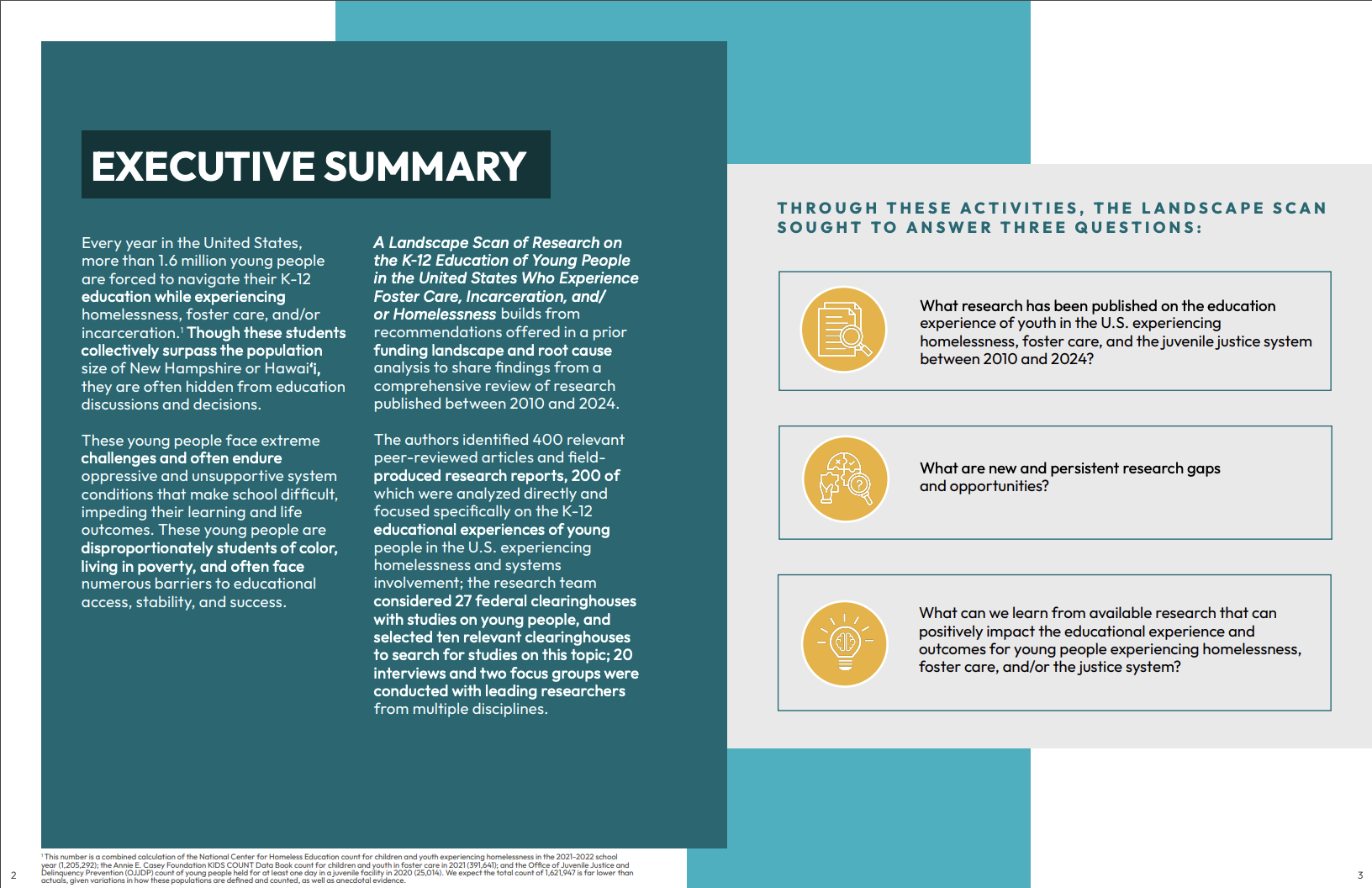
A Landscape Scan of Research on the K-12 Education of Young People in the United States Who Experience Foster Care, Incarceration, and/or Homelessness
Stephanie Malia Krauss, Maddy Day, Thaddeus Ferber, and Danielle Wallis

Annie E. Casey Foundation: Fostering Higher Education Webinar
In this webinar, the Annie E. Casey Foundation shares lessons and findings from a college-readiness effort focusing on youth in foster care. The session highlights promising strategies used in pilot programs at the Foundation‘s Jim Casey Youth Opportunities Initiative® sites in Georgia and Iowa.